
Welcome to part one of a Creative Writing Blog Series with Hannah Hooton
Descriptive Writing
Types of descriptive writing:
- Descriptions of people and places
- Remembrances
- Observations
- Vignettes (a single moment in the writer’s life)
What do you want to describe?
Why do you want to describe it? (Emotional motivation – don’t just describe what your grandfather looks like – describe his kindness and say why you admire him)
How do you intend to organise it? (spacial, temporal or thematic)
What dominant impression do you want to give?
Dominant impression
Focus on selecting details that help your readers see what you see, feel what you feel, and experience what you experience. Your goal is to create a single dominant impression, a central theme or idea to which all the details relate – for example, the liveliness of a street scene or the quiet of a summer night.
This dominant impression unifies the description and gives readers an overall sense of what the person, place, object, or scene looks like (and perhaps what it sounds, smells, tastes, or feels like). Sometimes – but not always – your details will support a thesis making a point about the subject you are describing.
Use:
- Sensory language
- Specific language
- Figurative language
SENSORY LANGUAGE
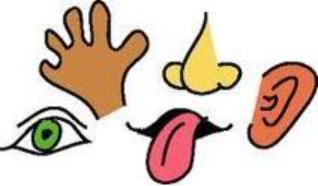
What are our FIVE senses?
Why is it a good idea to use senses in creative writing? It brings a scene to life. It helps you to show and not tell.
We are going to look at how imagery is not just about what we see, but what we hear, smell, touch and taste.
When describing abstract or inanimate things, channel its effects through a living thing in order to better enable the reader to relate to it. This is because we cannot empathise with an inanimate object.
If you see a street is damp, you can assume it has been raining, but you feel nothing for the dripping lamppost or the puddles on the sidewalk. It is more effective if a character is seen drenched to the skin and squelching in his shoes with cold rain dripping down his neck.
Exercise:
Name all the senses you can think of relating to the scene in the picture below (hint: some sensory items might not be visible in the picture).

Exercise:
Read/Listen to the Percy Jackson and the Lightning Thief and highlight every time a sense is used.
“What ho, Percy!” Mr Brunner shouted, and tossed a pen through the air.
Mrs Dodds lunged at me.
With a yelp, I dodged and felt talons slash the air next to my ear. I caught the ballpoint pen, but when it hit my hand, it wasn’t a pen anymore. It was a sword – Mr Brunner’s bronze sword.
Mrs Dodds spun toward me with a murderous look in her eyes.
My knees were jelly. My hands were shaking so bad I almost dropped the sword.
She snarled, “Die, honey!” and flew straight at me.
I swung the sword. The metal blade hit her shoulder and passed through her body as if she were made of water. Hisssss!
Mrs Dodds was a sand castle in a power fan. She exploded into yellow powder, vaporised on the spot, leaving nothing but the smell of sulphur and a dying screech in the air.
By the end of that exercise, the entire passage should be highlighted! Every single sentence uses sensory language to help envelope the reader in the scene.
When it’s done well, the reader won’t even realise you have used sensory language as a technique. All they will know is that they have been transported into the story and have experienced it first-hand.
Great descriptive writing combines all of the senses. It transports your reader to a place where they can feel the place and see the characters.
The key to doing this, and doing it well, is to combine a variety of sensory imagery in your writing.
You don’t necessarily need to include each of the senses every time you go to describe something, but it’s fun to view the world through the vivid lens of your senses.
Sight – words relating to visual perception
“The color is repellant, almost revolting; a smouldering, unclean yellow, strangely faded by the slow-turning sunlight. It is a dull yet lurid orange in some places, a sickly sulphur tint in others.” – The Yellow Wallpaper, Charlotte Perkins Gilman
Brightness: Light/bright/shiny/sparkly or dark/dim/tarnished
Size: Large/enormous/immense/gigantic or tiny/small/miniature/little
Colour density: Vivid/vibrant/rich/intense or pale/washed-out/dull/faded
Exercise:
Copy this image into a separate document and describe it in three sentences, focusing your attention on the use of sight.

Sound – words relating to auditory cognizance
“Once Dora forgot her shyness, and when Ronald said something, she laughed in reply. How sweet and pure that laughter was−−like a soft peal of silver bells! When Ronald Earle went to sleep that night, the sound haunted his dreams.” – Dora Thorne, Charlotte M. Braeme
Alternatively, the lack of sound is equally effective:
“Have you ever heard the wonderful silence just before the dawn? Or the quiet and calm just as a storm ends? Or perhaps you know the silence when you haven’t the answer to a question you’ve been asked, or the hush of a country road at night, or the expectant pause of a room full of people when someone is just about to speak, or, most beautiful of all, the moment after the door closes and you’re alone in the whole house? Each one is different, you know, and all very beautiful if you listen carefully.” – The Phantom Tollbooth, Norton Juster
Volume: Loud/deafening/booming or quiet/whispering/rustling
Pitch: Shrill/high-pitched/falsetto/piercing or deep/low-pitched/baritone/bass
Rhythm: Repetitive/metronome/regular or varying/intermittent/erratic
Exercise:
Copy this image into a separate document and describe it in three sentences, focusing your attention on the use of sound.
Touch – words relating to tactile sensations or the feel of things through our skin:
“His fingers encountered stone: he followed the irregularity of the surface with his nails, feeling the dampness and roughness which told of age and neglect.”
“The sun had beaten the earth until it was hard and cracked, the dust powdery on top, crusty underneath, and the air so dry it seemed to suck the moisture from your skin.”
Texture: Downy/soft/feathery or abrasive/coarse/rough
Pressure: Light/gentle/delicate or heavy/harsh/dense
Temperature: Burning/scalding/itching or freezing/icy/soothing
Exercise:
Copy this image into a separate document and describe it in three sentences, focusing your attention on the use of touch.

Smell – words relating to olfactory reception
“The smell of death hung heavy over the town, a sour, sickly smell that made you want to hold your breath.”
Scent: Floral/aromatic/fragrant or odourless/neutral/unscented
Strength: Stinky/pungent/over-powering or insipid/weak/airy
Freshness: Musty/stale/decayed or paint-fresh/clean/hygienic
Exercise:
Copy this image into a separate document and describe it in three sentences, focusing your attention on the use of smell.

Taste – words relating to gustatory response
“The children bit into a piece of heaven, munching crispy crust, finding soft apple with a crunch of nut and sweet raisin. Cinnamon and sugary fruit oozed out of the pastry, making sweet puddles on the dessert plates.” – Summer at the Beechermans, Ellen Buikema
“Roland didn’t think revenge was sweet. It tasted more savoury, like the soft tangy flavour of cheese deliciously colliding with the tastebuds, followed only then by the springy sweetness of peppermint brushing over the tongue. Yes, sweet but also savoury. Either way, delicious.” – Zombie Talisman, Kati Coolidge
Sweet vs sour: sugary/saccharine/sickly or tart/unsweetened
Flavoursome vs bland: meaty/umami/spicy/herby vs mild/bland/tasteless
Texture: lean/crisp/crusty or oily/greasy/buttery
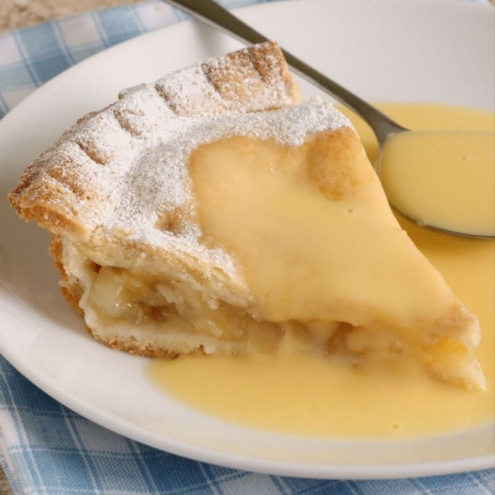
Exercise:
Copy this image into a separate document and describe it in three sentences, focusing your attention on the use of taste.
Exercise:
Read the poem below. Notice how the poet uses senses.
Wings
If I had wings, I would touch
The frail fingertips of clouds.
If I had wings, I would taste
A chunk of sun, as hot as peppered curry.
If I had wings, I would listen
To the clouds’ soft breath.
If I had wings, I would smell
The scent of fresh raindrops.
If I had wings, I would gaze
As the people who cling to the earth’s crust.
If I had wings, I would dream of swimming the deserts
And walking the seas.
Pie Corbett
The poet has used his senses to write about what he could touch, taste, hear, smell and see.
Exercise:
Write your own 5-stanza poem to talk about senses.
Exercise:
Read the following passage and highlight every time a sense is used.
Noa noticed the change in atmosphere as soon as she stepped through the door. Spock whined beside her and his rough scratchy fur grazed her leg.
‘Shhh.’ Her fingers clamped tighter around the cold metal leash. The soft tinkle of the chain links broke the eerie silence. Her eyes darted from one dim deserted corner of the room to the next, hearing the abandonment rather than seeing it, but feeling the presence of someone, of being watched despite the boarded-up windows.
A thin cold whisp of air floated by her. At first, she couldn’t place the odour, then she realised with a half gag that it smelt exactly like a butcher’s shop. It smelt like blood, of meat, of death.
Noa’s knees trembled and she was tempted to follow Spock, who was pulling on his leash to go back outside, but she’d promised Vivienne she would investigate her disappearance if she should ever go missing. She took another step into the room. Grit and cement crumbs crunched beneath her shoe.
Another draft of air whispered past and this time Noa heard the faint echoes of someone crying: a lonely pitiful cry that floated through the air like a thin violin chord.
‘H-hello?’ she called. Her fear echoed around the building. The further she ventured inside, the colder it became until she clutched her arms and rubbed her sleeves. ‘Vivienne? Are you here?’
The shadowy corners suddenly lit up in a blinding light. Noa threw her arms over her eyes and stumbled backwards. But the door slammed behind her with a loud and threatening clang.
Great descriptive writing combines all of the senses.
It transports your reader to a place where they can feel the place and see the characters. The key to doing this, and doing it well, is to combine a variety of sensory imagery in your writing.
You don’t necessarily need to include each of the senses every time you go to describe something, but it’s fun to view the world through your senses.
Smell
Exercise:
Read the following passage…
“…Jack sniffed the air. He ignored the scents that had come into the room with him, dismissed the scents that he could safely ignore, honed in on the smell of the thing he had come to find. He could smell the child: a milky smell, like chocolate chip cookies, and the sour tang of a wet, disposable, nighttime diaper. He could smell the baby shampoo in its hair, and something small and rubbery – a toy, he thought, and then, no, something to suck – that the child had been carrying.” – The Graveyard Book, Neil Gaiman
… now choose one memory and describe it starting with your sense of smell.
…
Sound
We can often identify where we are by the sounds we hear. For example, close your eyes. What can you hear around you right now? These are sounds that you might hear often, but don’t pay close attention to. As a writer, using these small sounds adds detail and a realistic touch to any setting.
Exercise:
Put your character into a dark place. What do they hear? How do they respond to the noises? How do the sounds inform the reader of the setting? Write 8-10 lines.
…
Sometimes, we have to be creative with our senses in order to make the reader understand what it is really like to be right there in the scene, especially if the story features made-up animals and other things, because they don’t know what an alien smells like or a flying panda sounds like. To help them, we compare them to things they DO know. So we would say “the alien smelt like vanilla ice-cream and wet dog” or “the flying dinosaur squealed like a baby elephant trumpeting.”
Exercise:
Each of the following sentences is very basic. Think of what you might see, hear, smell, feel and touch in each sentence. Then rewrite it, changing or adding sensory detail. The first one has been done for you.
- I sat on the sofa. (sight, smell)
I sank down onto the threadbare sofa, burying my face in its faded brown fabric, where I could very faintly smell yesterday’s dinner, and the dog, and my father’s cologne… all mingling together into a single scent called home.
- We enjoyed the meal. (?,?)
…
- The stadium was packed. (?,?)
…
- The pathway was dark. (?,?)
…
- It began to rain. (?,?)
…
Exercise:
Write a story (8-10 lines long) around the picture below that uses sensory language. Here, you will have to use comparisons to imagine what the dragon sounds/smells/looks like.
Use four words from your vocabulary builder in your piece.

…
As well as a structural plan, it’s also a good idea to take a couple of minutes and think of instances when you might use sensory language.
For example, if you’re writing a story about visiting a food market, you might include:
Sight: brightly coloured stalls, people, cheese, meats, blue sky
Smell: cooking onions, hamburgers, popcorn
Sound: people talking, yelling, popcorn popping, food sizzling
Touch: soft burger buns, hot popcorn, people brushing against me, hard coins to pay, sunshine
Taste: popcorn, hamburger
Exercise:
Close your eyes and think of a recent memory that evokes strong sensory impressions (e.g., the beach, a forest, a kitchen).
Jot down words or phrases that describe the sensory details associated with that place (sights, sounds, smells, tastes, and textures).
…
Exercise:
Now write a description of at least 5 lines describing that memory making the best use of all of your senses. For example, using at least one sense per sentence. Use all of your senses!
…
Exercise:
Write a five-sentence description of each of the following in which a character is at the heart, and ensure each sentence represents a sense.
An earthquake
A dinosaur enclosure
A storm
A campsite
A farmyard
For example: An old house –
- A meandering odour of dust and mould curled around Nick’s body and into his clothes as he stepped across the creaking floorboards of the old house.
- The further inside he went, the more difficult it became to see and the sheet-covered furniture seemed to change from sad abandoned lumps into crouching beasts, ready to attack him.
- Fear stewed in the back of his throat as he crept deeper into the caverns of the house, leaving a dry putrid taste in his mouth.
- Finally, he reached the staircase, though dusty and dull, still fanning grandly up into the eaves and Nick reached out and touched the smooth dark wood of the bannister’s base rail and pressed down on the thistle-carved cap.
- A low rumble rolled beneath his feet and the house began to shake, rousing trillions of dust particles into flight like fairy dust.